

Southern Africa is the continent’s most industrialized and infrastructure-rich region. Anchored by South Africa — Africa’s most sophisticated economy — the region combines deep capital markets, mining wealth, tourism assets, and growing tech ecosystems. But Southern Africa is more than South Africa. Botswana’s diamond-fueled development model, Namibia’s green hydrogen ambitions, Zambia’s copper boom, and Zimbabwe’s agricultural potential make this a region of diverse opportunities and underappreciated potential.
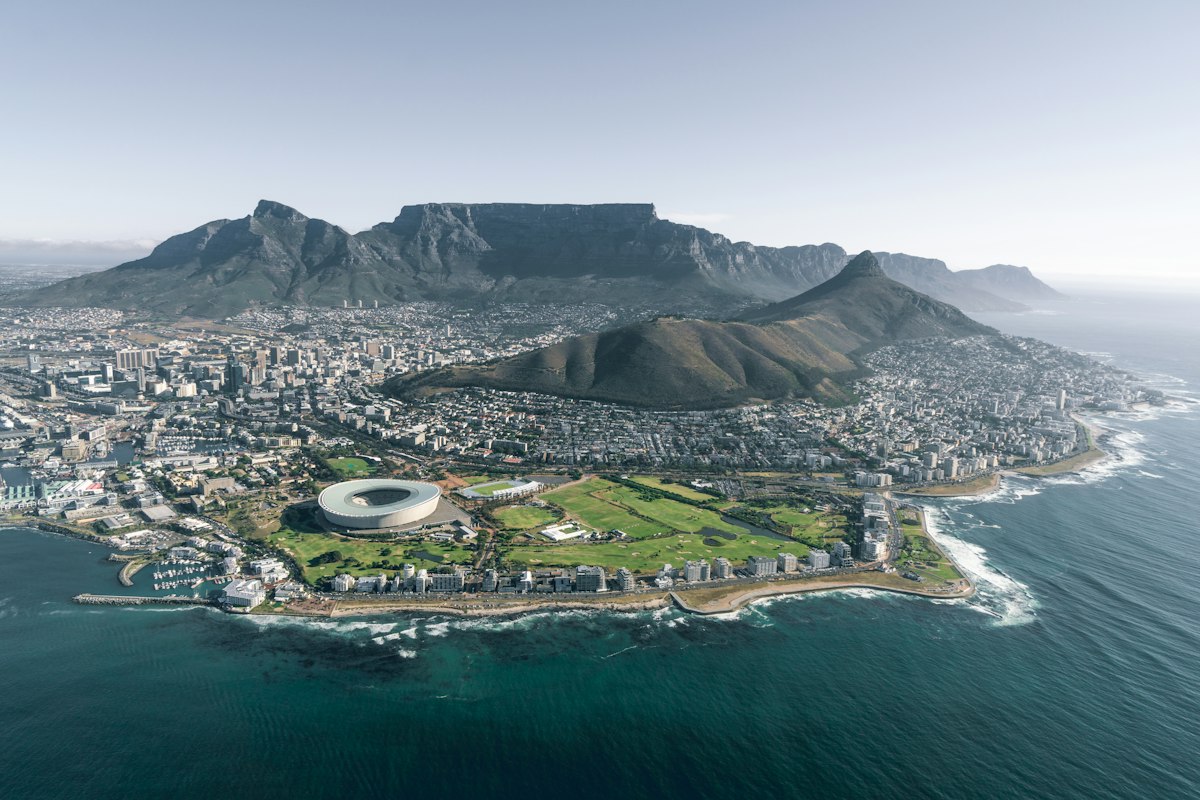
1. South Africa — Africa’s Most Diversified Economy
South Africa is Africa’s most industrialized economy, with deep capital markets, a sophisticated financial sector, world-class universities, and a diversified economic base spanning mining, manufacturing, agriculture, tourism, and technology. The Johannesburg Stock Exchange is Africa’s largest and among the top 20 globally by market capitalization.
Cape Town has emerged as Africa’s leading tech hub for deep tech, cybersecurity, and B2B SaaS companies. Companies like Naspers (one of the world’s largest tech investors), Takealot, and Yoco were built here. The Western Cape’s quality of life, reliable infrastructure, and talent pool attract international tech workers and digital nomads.
Challenges are significant: unemployment exceeds 30%, load-shedding (planned power outages) has hampered growth, and inequality remains among the world’s highest. But the 2024 coalition government has brought new political dynamics, and the country’s institutional depth — independent judiciary, free press, central bank credibility — provides resilience that few African economies can match.
2. Botswana — The Diamond Standard of African Development
Botswana is Africa’s greatest development success story. When it gained independence in 1966, it had fewer than 12 km of paved road and was one of the world’s poorest countries. Diamond revenue, managed with rare transparency and long-term vision, transformed the nation into an upper-middle-income country with one of Africa’s highest per-capita incomes.
Key achievements:
- Governance: Consistently ranked among Africa’s least corrupt nations
- Healthcare: Free antiretroviral treatment program — one of the world’s most comprehensive
- Education: Universal primary education and growing tertiary sector
- Diversification: Moving beyond diamonds into tourism, beef exports, and financial services
Botswana’s challenge is economic diversification. Diamonds won’t last forever, and the country needs to build new industries. Its small population (2.5 million) limits domestic market scale, making regional integration essential.
3. Namibia — Green Hydrogen Pioneer
Namibia is positioning itself as a global leader in green hydrogen production. The country’s abundant solar and wind resources, combined with vast open land, make it ideal for renewable energy generation. The $10 billion Hyphen Hydrogen Energy project aims to make Namibia one of the world’s first green hydrogen exporters.
Beyond hydrogen, Namibia’s economy is built on mining (uranium, diamonds, zinc), tourism (Sossusvlei, Etosha, Skeleton Coast), and fishing. The country’s small population (2.5 million) and vast territory create unique challenges and opportunities. Namibia’s community conservancy model — where local communities manage wildlife and benefit from tourism revenue — is recognized as a global best practice in conservation.
4. Zambia — The Copper Comeback
Zambia sits on some of the world’s largest copper reserves, and with copper demand surging due to the energy transition (electric vehicles, renewable energy infrastructure, data centers), the country is experiencing a mining renaissance. Major new mining investments are expected to double copper production by 2030.
Zambia’s challenges are recent. A sovereign debt default in 2020 shook investor confidence, but the country has since completed a debt restructuring and implemented economic reforms. Victoria Falls (shared with Zimbabwe) drives a significant tourism industry. Agricultural potential — particularly in maize, soybeans, and sugar — remains largely untapped.
5. Zimbabwe — Agricultural Potential and Mineral Wealth
Zimbabwe has the talent, natural resources, and agricultural land to be an economic powerhouse. The country has significant reserves of lithium (essential for batteries), platinum, gold, and diamonds. Its agricultural sector — once the breadbasket of Southern Africa — is recovering, with tobacco remaining the top export crop.
Challenges are well-documented: currency instability, political uncertainty, and infrastructure decay. But Zimbabwe’s highly educated population and entrepreneurial spirit mean that when conditions improve, the rebound could be rapid. Victoria Falls and the Eastern Highlands offer world-class tourism potential.
SADC — Regional Integration
The Southern African Development Community (SADC) provides the framework for regional cooperation. With 16 member states and a combined GDP of over $700 billion, SADC covers trade facilitation, infrastructure development, and peace and security. The SADC Free Trade Area covers 85% of intra-regional trade.
| Country | Population | GDP | Key Strength |
|---|---|---|---|
| South Africa | 60M | $405B | Finance, mining, tech |
| Botswana | 2.5M | $20B | Diamonds, governance |
| Namibia | 2.5M | $13B | Green hydrogen, mining |
| Zambia | 20M | $28B | Copper, agriculture |
| Zimbabwe | 16M | $22B | Lithium, agriculture, talent |
Key Takeaways
- South Africa’s institutional depth and diversified economy anchor the region
- Botswana’s governance model proves that resource wealth can drive inclusive development
- Namibia’s green hydrogen play could make it a global clean energy leader
- Zambia’s copper reserves are increasingly valuable in the energy transition
- Zimbabwe’s lithium, talent, and agricultural potential await the right conditions
Southern Africa combines the continent’s most mature economy with some of its most exciting emerging stories. Explore the countries of Africa or learn about investing in Africa.


